St. Johns County · 32082
Wolf hood and range repair in Marsh Landing
A gated community on the salt marsh side of A1A, where the air is wet, still and salty, and hood blowers reach us before anything else in the kitchen does.
Conditions
- ZIP
- 32082
- County
- St. Johns County
- Salt exposure
- Direct — blower housings, spark electrodes, hinges and stainless seams
- Access
- Gated and staffed. The gate needs your name on the visit before it will pass a service van.
- Communities
- Marsh Landing
On the ground
Marsh Landing sits between A1A and the Intracoastal, which is a different exposure from oceanfront and a worse one in a specific way.
Still, wet, salty air
On the beach side, the wind moves. Salt arrives and a lot of it leaves again. Back here on the marsh, air sits. Tidal marsh produces its own humidity all night, and the morning dew point in this pocket is reliably high enough to leave everything metal damp for hours after sunrise.
Damp and salty together is worse than salty and dry. Corrosion needs an electrolyte, and a film of dew on a salted surface is exactly that. It is why we replace more blower motors per house here than in the drier, breezier streets closer to the ocean, and why the harness terminals inside a hood cabinet in Marsh Landing look older than the date on the appliance.
The marsh also carries sulphides on a falling tide. Households notice it as a smell after a storm; on equipment it shows up as tarnish on copper and brass — on burner orifices, on wire terminals, on anything with an exposed bright contact.
How we work a noisy blower here
Because the same fault keeps arriving from the same streets, the diagnosis has settled into an order.
The wheel gets turned by hand first, with the power off. A dry bearing is audible and felt before any meter comes out, and a wheel that is heavy on one side tells you the crust is doing the damage rather than the motor. Then the squirrel cage and the housing get inspected for the salt-and-grease crust that throws the balance off, because cleaning that is a service rather than a part. Then the damper, which sticks in this air and quietly halves the airflow while the motor sounds perfectly healthy. Then the speed control and the harness terminals, where marsh damp does its work. The motor itself is the last thing we condemn, not the first, and the difference between catching it at the rumble and catching it at the whine is usually the difference between a clean and a part.
The housing stock
Most of Marsh Landing went up from the late 1980s into the 1990s, which puts the original kitchens at or past thirty years old. That has a consistent consequence: the appliances are usually second generation, dropped into cabinet openings sized for the first.
The recurring problems are a rangetop cutout that is a fraction narrow, a rear gap too shallow to take a gas connection without a hard bend, and a hood duct run that was routed for the original unit and now serves a blower it was never sized for. Long duct runs with extra elbows are common here because the houses are wide and single-storey in places, and every elbow costs airflow that the motor then works harder to make up.
A word on that, because it is the thing we get called about by mistake more than anything else in Marsh Landing. We measure the duct run when a hood will not clear the kitchen, and we will tell you in plain terms if the run is the limit rather than the blower. We do not install ducting, we do not replace or clean it, and we do not work on the heating or air conditioning that shares the attic with it. Those are sheet-metal and mechanical trades and they are not ours. What we repair in this community is the appliance: the hood and its blower, ranges, rangetops, wall ovens and steam ovens, and the built-in grills out on the terraces.
Getting through the gate
Marsh Landing is gated and staffed. The gate needs your name on the visit before it will let a service vehicle through, and if the appointment is booked in somebody else’s name — a property manager, a family member — it is worth calling the gate yourself the morning of the visit. It is the single most common reason a first appointment in this community starts late.
Access inside is straightforward once through. Driveways are long and there is almost always room for a van.
What we mostly do here
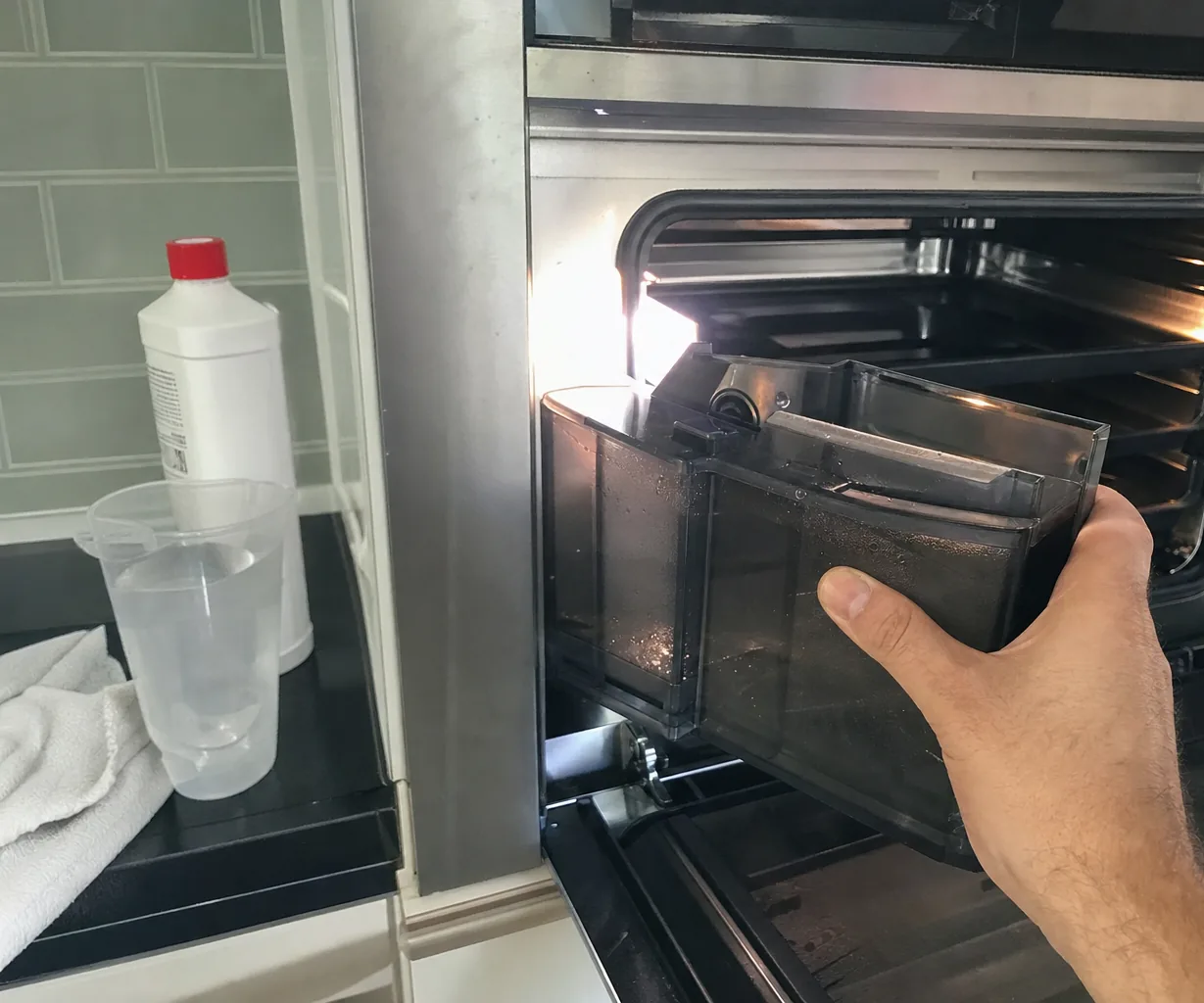
Hood blowers first, by a distance. Then steam oven fill and drain circuits. Then the gas side of ranges and rangetops — igniters and spark modules, where the marsh damp gets into the electrical parts sitting next to the gas train rather than into the gas train itself.
Flat diagnostic fee, credited toward the repair. Written estimate before any part is ordered, genuine OEM parts.
One trade
What we come to Marsh Landing for
We are a kitchen trade. The hood is where it ends: we repair the blower, the controls, the speed switch and the connection at the hood itself, and we will tell you when a duct run is the reason a kitchen will not clear. Installing, replacing or cleaning the ducting of a house is somebody else’s work, and so is anything to do with heating or air conditioning. If that is what you need, we would rather say so on the phone than send a van that cannot help.
We repair
- Ranges, rangetops and cooktops
- Built-in wall ovens and convection steam ovens
- Ventilation hoods, their blowers, controls and the hood end of the duct
- Built-in outdoor gas grills
We do not
- Heating, furnaces and heat pumps
- Air conditioning, and the ductwork that serves it
- Duct installation, duct replacement and duct cleaning anywhere in the house
- Refrigeration, dishwashers and laundry
What we fix here
- Wolf gas range repairGas range
- Wolf convection steam oven repairConvection steam oven
- Wolf hood, blower and downdraft repairVentilation hood
Notes from this side
Nearby
- Ponte Vedra Beach32082
- Sawgrass Country Club32082
- Sawgrass Players Club32082
- The Plantation32082
- Palm Valley32082
Booking
Give us the model number off the rating plate and what the appliance is doing. We schedule the visit by phone and confirm the window the day before.
After a call in Marsh Landing
4.6
out of 5, across 67 customer reviews. Each one below is a single visit, written by the person who paid for it.
Water was collecting in the bottom of the cavity after every use. He found the drain path half blocked with a soft grey deposit, cleared it, then flushed the line and checked the fall on the hose.
Marisela R.
The hinges had let the door drop and heat was escaping across the top edge. He replaced both, adjusted the spring tension and rechecked the seal with a strip of paper the whole way round the frame.
Marguerita S.
The French top was heating unevenly and the middle stayed cool. He checked the burner underneath, found a partly blocked port ring and cleared it, then verified the spread of heat with a thermal reading.
Theodora E.
The book
What does this repair cost?
$80
Flat $80 diagnostic covering the visit and the full diagnostic sequence, credited toward the repair once you approve the work. Everything under it is a band, not a quote. The figure that counts is written down after the diagnosis, and it covers the part, the labour to fit it, and the warranty — 90 days on labour, 365 days on parts, genuine OEM parts only.
| What was wrong | Typical finished repair |
|---|---|
| Diagnostic visit on its own | $80, credited |
| Igniter or spark module replacement | $190–$540 |
| Burner valve or orifice service | $220–$710 |
| Oven thermostat or temperature sensor | $170–$530 |
| Convection fan or motor | $260–$730 |
Those are the bands this page's faults land in; the rest of the book is on the rates page. The top of them is $730, and nothing at all — at that figure or well under it — is billed without a written estimate you have agreed to first.
Asked on the phone
What else do people ask?
- Do gated communities cost more to visit?
- No. The $80 diagnostic is the same wherever you are inside the 40-mile radius, gate or no gate. What we ask is that the gate has the name before the day: a van turned away at a callbox is a visit nobody gets paid for.
- What does a visit cost?
- Flat $80 diagnostic, credited toward the repair when you go ahead with it. You get a written estimate before any part is ordered or any labour is billed. There is no separate travel charge inside the 40-mile radius.
- Are the parts genuine?
- Genuine OEM parts only. We quote the supplier's lead time rather than a promise, and if a part is on back order you hear that before you commit to the repair.
- Is this an independent shop, or an authorized service centre?
- Independent, and not an authorized service centre. No manufacturer appoints, vets, trains or supervises Dunecrest Cooking Service, and nothing here should be read as though one did. We name Wolf only to say which appliances we work on.